
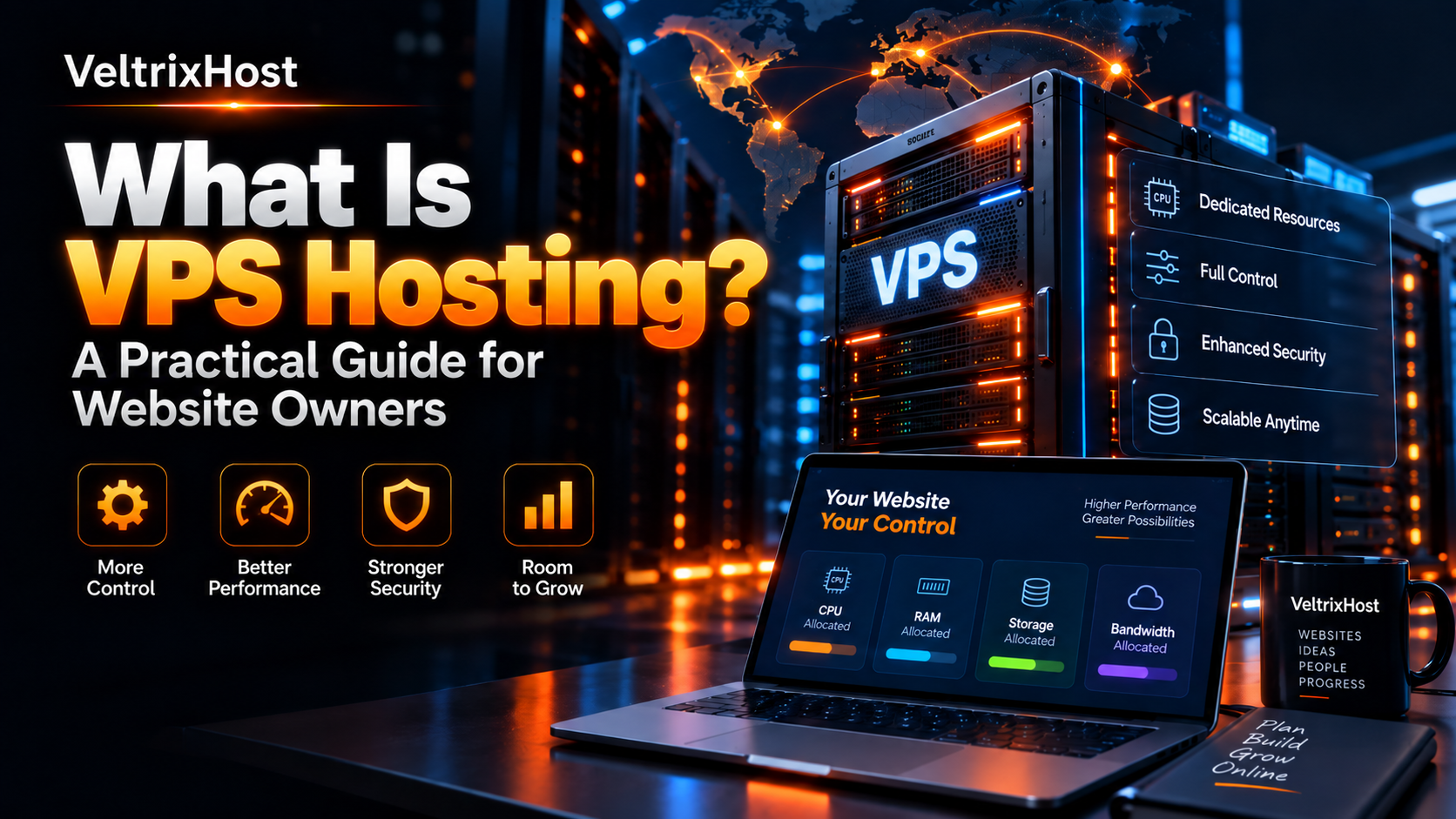
VPS hosting is a popular choice for website owners who need more control, flexibility, and resources than standard shared hosting can provide. But what exactly is a VPS, and when does your website actually need one?
This practical guide explains VPS hosting in simple terms so you can decide whether it is suitable for your website.
What Is VPS Hosting?
VPS stands for Virtual Private Server. A physical server is divided into multiple isolated virtual environments using virtualization technology. Each VPS operates with its own operating system, allocated server resources, and configuration.
This gives website owners greater control over their hosting environment without requiring an entire physical server.
For a more technical explanation of how virtualization works, IBM provides a useful Virtual Private Server overview.
How Does VPS Hosting Work?
Think of a physical server as a large building divided into separate apartments. The building is shared, but each apartment has its own private space and resources.
A VPS works in a similar way. Multiple VPS instances can operate on the same physical machine while remaining separated from one another.
Depending on your hosting plan, you receive allocated amounts of:
- CPU
- RAM
- Storage
- Bandwidth
- IP addresses
You can also have greater control over software, server settings, and operating system configuration.
VPS Hosting vs Shared Hosting
Shared hosting is often a practical starting point for smaller websites because the hosting provider handles most server administration.
VPS hosting becomes useful when you need more independence.
With a VPS, website owners can usually install custom software, configure server services, manage security settings, and control their hosting environment more directly.
However, that additional control also means server management requires more technical knowledge unless management assistance is included.
When Should a Website Owner Consider VPS Hosting?
You may want to consider VPS hosting when your website:
- Needs more resources than shared hosting provides
- Requires custom server software
- Needs greater control over server configuration
- Runs multiple websites or applications
- Requires root or administrator-level access
- Is growing beyond the limits of its current hosting environment
There is no need to move to a VPS simply because your website is online. The right time to upgrade is when your actual technical or resource requirements justify it.
Choosing the Right VPS
Start by checking how much RAM, CPU, storage, and bandwidth your website currently uses. You should also consider your operating system, software requirements, technical experience, and expected growth.
If you want to see how these resources are presented in real VPS packages, you can review the VeltrixHost Linux VPS plans and compare the specifications with your website’s requirements.
Recommendation:
VPS hosting gives website owners a useful middle ground between shared hosting and running an entire physical server.
For websites that need more control, configurable resources, or custom server software, a VPS can provide a flexible environment that can grow alongside the project.
The most important step is simple: choose hosting based on what your brand actually needs.
